Start with a Response to My own Childhood
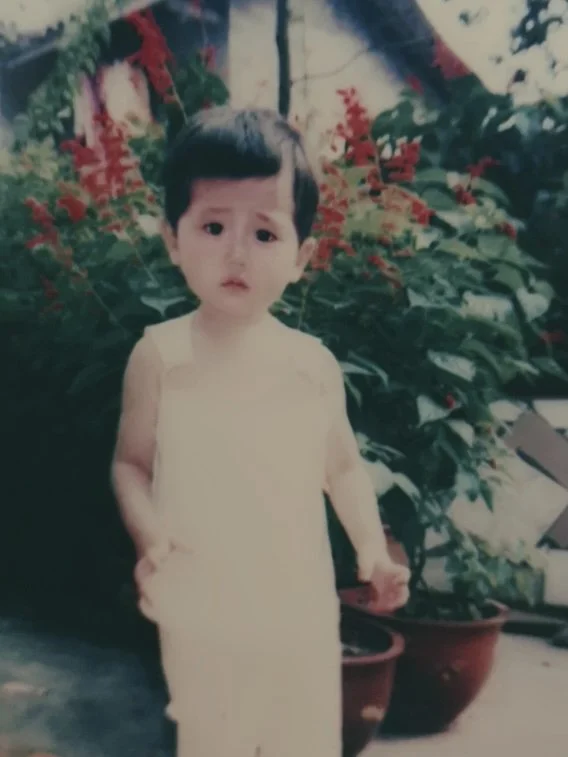
My name is Xixi. I come from a small village in Sichuan Province, China. I grew up with my granny (my mother’s mother) because my parents divorced when I was very young, so I have never met my father. In early-2000s China, many young couples in the countryside had to leave home to work in order to earn cash, because the land could only produce agricultural commodities and rarely generated income. As a result, their children were left in their hometowns to be raised by grandparents. Children in this particular social context are called “left-behind children”. Most of my classmates at that time were “left-behind children”, and nobody thought there was anything wrong with this phenomenon.
That is how I went through compulsory education, until I entered a university far from my hometown. For my undergraduate degree I studied early childhood education for a very simple reason: I wanted to figure out one question: what kind of childhood is the best childhood that human beings deserve? I gave no thought at all to practical matters such as future career development. Later, through my undergraduate studies, I did gain a broader understanding of the developmental potential of a high-quality childhood, but not a deep or concrete one, because education, as a social science, struggles to give you the more certain feeling that neuroscience or other sciences do. Much of the time you feel you are only learning the discussion of one viewpoint after another, rather than approaching some kind of fact, as science does.
Studying from the West
I also gradually realized that most of what I had learned came from the West, which made me want to study this field abroad. In September 2022, I came to London. Before that, I had never really used English for real social interaction, and I had never been abroad. I had only used English to do reading-comprehension questions and pick the correct answers. So I started this year of master's study almost terrified, yet also expecting a refreshing experience. Over that year, which cost about £50,000 (tuition, accommodation, and living expenses), I learned only three things:
First, there is always another possibility in the world, and that word is “alternative”, so there is never any need to feel despair or complacency about any situation; nothing is something you must have, and the world is more forgiving than we imagine.
Second, the essence of the academic world is “critical thinking”.
Third, the essence of innovation is “recombination”.
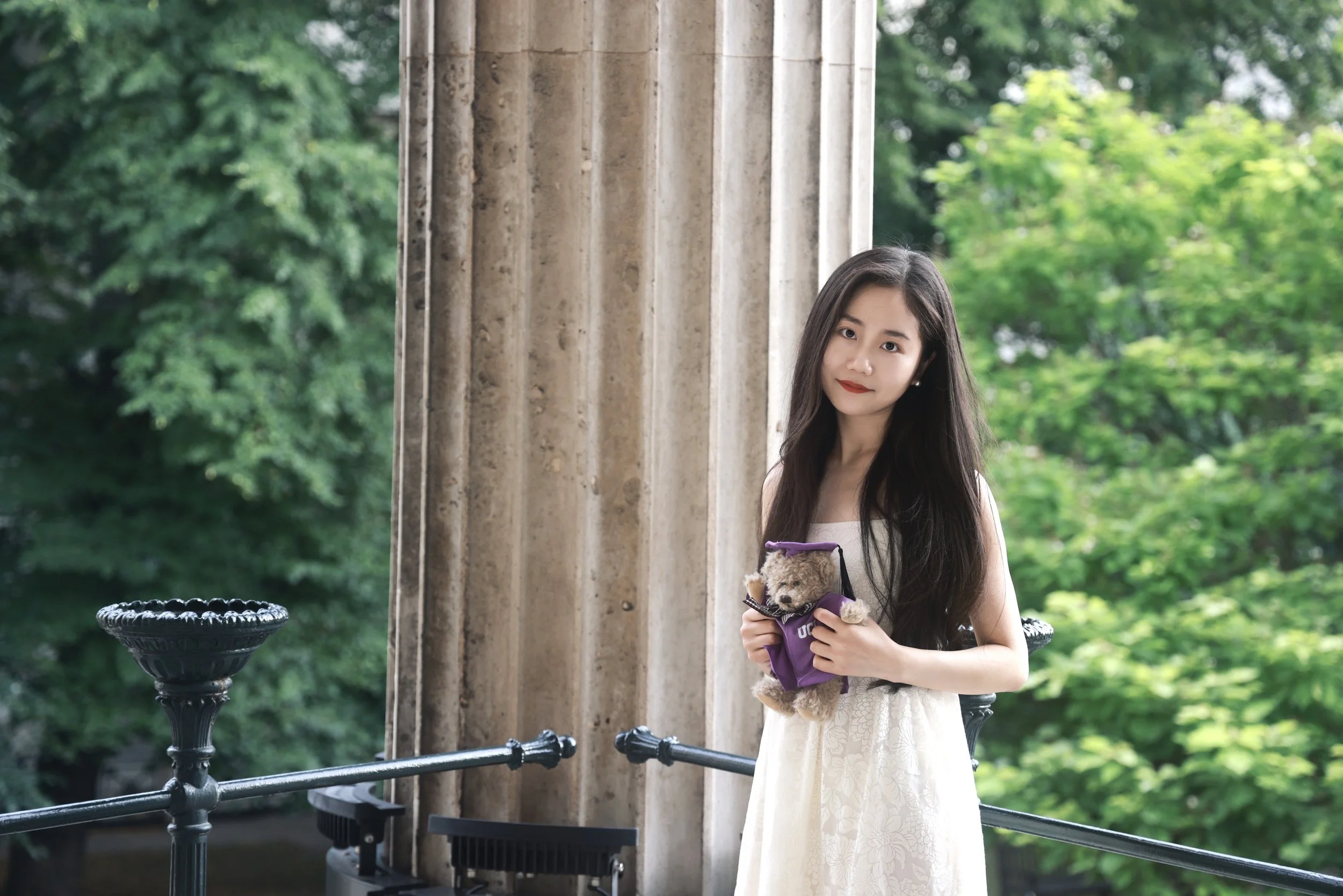
Since I figured out these three principles, I have become much more confident in doing assessments. In addition, because I studied at UCL, I can use the library resources for £50 a year as an alumni. These are all the supports I have received from the western higher education institution. It may seem little, but it fundamentally changed the way I perceive the world. In September 2023, I graduated from my master’s degree with Distinction, which put a perfect full stop on this training in academic literacy.

Working in London’s Nursery
After graduating, I had to pay my own rent, and I needed to find a job that offered a work visa in order to stay in London, so I immediately started working at a very small nursery in London. Three months later, I obtained a work visa and moved to the nursery where I now work. These last three years of working experience have left me very lost. This bewilderment comes from the feeling that my job never seems to make use of what I learned in higher education, and it can even look somewhat absurd, as if it could be done with a little common sense.
Working in London has not answered the deepest question in my heart: what kind of childhood do we want to give our next generation, and why? This feeling has become even more complicated with the rapid development of AI. I sense that the world is undergoing some kind of change, but when facing the young lives I encounter every day, we know nothing about this change. No one bothers to respond to the situation or seek change. Every day I work without needing to make any intellectual effort, and what is worse, I am not allowed to think; all I need to do is be an obedient staff and follow whatever requirements others set.
Within this industry, there is always ambiguity coming from the market or from bureaucrats. For instance, people try to convince us that we should develop children’s mathematical ability, but through conversation, I discovered that they do not know what developing children’s mathematical ability actually means. They can tell you which key abilities to develop, but they lack a systematic understanding of the discipline and any real imagination of how it applies in the real world; everything seems just a form of rhetoric. And with AI acting as a catalyst, I have also developed a kind of identity crisis: in an era like this, people like me who hold liberal arts degrees seem, to some extent, are “illiterate”.

What’s next?
So I want to begin by changing my own practice and making some effort for this field. I want to find out how early childhood educators can find their place in the age of AI, how to deconstruct some structural problems from within, and how to keep changing the existing narrative frameworks of education through a multidisciplinary perspective. More importantly, I want to use my own practice as material to explore how an individual can cross differences in education and cultural background, and what this crossing itself actually means.
Finally, I want to say that from a distance this world looks as expressionless as a concrete wall. You do not know what to do to ease the somewhat awkward or cold relationship between you and the world. But if we choose to see something and choose to speak out our thoughts, you will discover that the world is nothing but a web woven from one vivid life story after another, a web we share, a web full of infinite possibilities. I choose to weave my life into this great web, in a way that I want and enjoy.
Thank you for seeing my story. I know you also have your own story waiting for me to see.