Psychology Can Define the Human Mind, but Literature Coexists with It
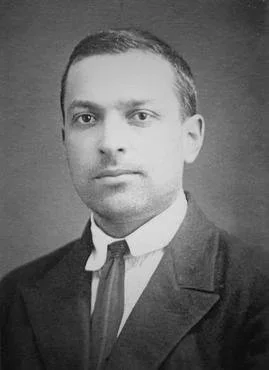
At 21, Vygotsky graduated from Moscow University and began his own literary research. For the next six years he taught literature and psychology at a school in Gomel. This detail caught my attention, because from a modern point of view it is hard to understand why literature and psychology would go together. It made me realize how modern a discipline psychology is: in the long span of human history, it seems to have only just been born.
My own interest in psychology came from my undergraduate study of child psychology, where I encountered attachment theory and various sensory-integration experiments. Grounded in experiments and physiology, it was of course persuasive to me, a "science" worth following. Yet I had not realized that for the vast majority of human history we had no psychology, and that, speaking for myself, psychology has never truly touched me. I know theapy exists, but I instinctively do not trust it to reach my inner feelings, and I also lack confidence in confiding in a stranger, at least it matters less to me than the stories that have always lingered in my heart. Were it not for those stories that have always lived in my heart, and the vivid characters within them, whether real or fictional, I would not know where I could have found the will to live to today.
So Vygotsky's experience made me realize that literature, or, in a larger sense, philosophy and religion, and even witchcraft, played a role in human history far more sacred and great than we imagine. Their existence bears witness to how human groped our way toward seeing our desires clearly, discovering our humanity, and bravely exploring and interpreting the world. In this age that embraces science, science, however, has rarely been a cradle in which the human mind can nestle, or a balm that soothes the soul, instead it dismembers human feelings, cognition and behavior into fragments, without being able to see the whole meaning of life and civilization.
This is why I have come to understand why Vygotsky, in researching children's psychological development, emphasized the social and cultural factor: our lives are not experimental specimens in a medical laboratory. We live immersed in a cultural medium, where we touch our history and civilization, and we perceive the world through interactions between people. These feelings cannot be measured by sensors, nor captured and explained by neuronal connections. Do not be misled by the so-called "science of soul" into believing that only precise scientific concepts can offer the most reasonable explanation of our minds and behavior, and thereby abandon the spiritual home that literature, or the broader materials of history and culture, have built brick by brick over a long history, the home that has nourished the human mind all the way to today. Without them helping us understand what humanity is, what justice is, and what courage is, our society could not be the society it is today.
After realizing this, I feel that my professional discourse as an educator is no longer confined to child psychology and stages of cognitive development, but has moved toward a broader historical and cultural space. It has also given early childhood cultural experiences a higher-dimensional meaning, rather than understanding them only from a functional perspective, such as promoting the development of language and literacy.